Learning New Color Concept Associations
Understanding how color-concept associations map onto dimensions in color space
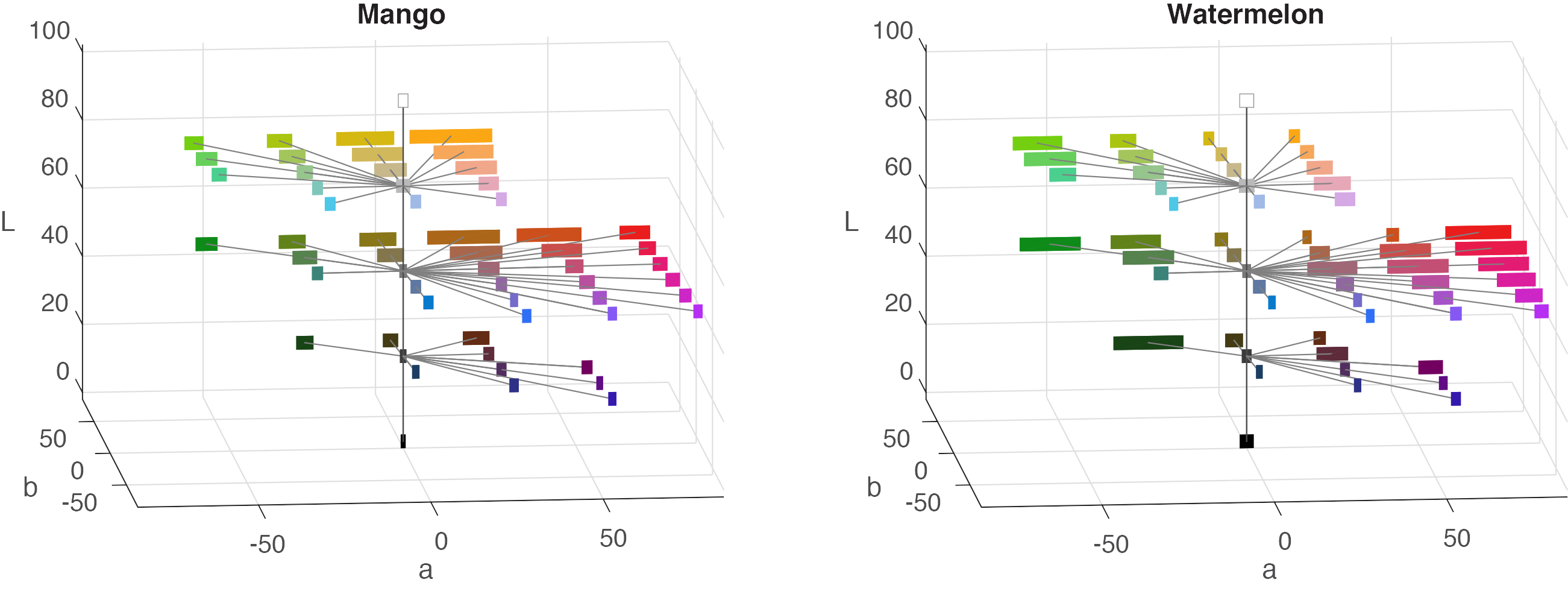
Both in the scientific literature and in popular culture, it is common to find claims like color x means y (e.g., red means anger). However, color-concept associations are not so discreet or unitary. Color-concept associations are graded and continuous across color space, not all-or-none. Researchers can quantify the associations between a given concept and all possible colors, and represent them in what we call a “color-concept association space”. We contend that every concept has a color-concept association space, which means every color is associated with every concept to some degree, even if that degree is near zero.
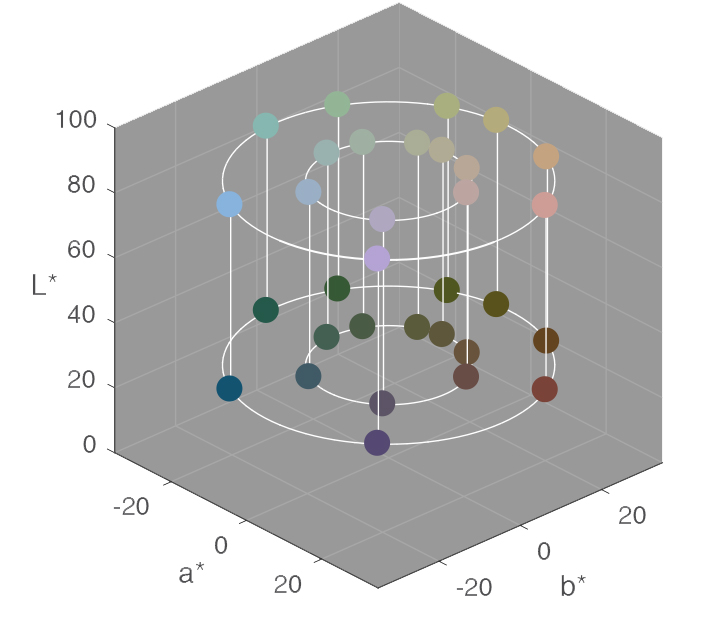
From this perspective, we can approach characterizing color-concept associations by quantifying how they map onto dimensions within color space (e.g., lightness, chroma, redness vs. greenness, and yellowness vs. blueness). This approach has been shown to dispel commonly held notions about color-concept associations. In particular, it is commonly held that yellow hues are associated with happiness whereas blues hues are associated with sadness. We found that happiness/sadness of colors was dominated by lightness and chroma. When lightness and chroma were controlled statistically or colorimetrically, yellow hues were no happier than blue hues and in some cases blue hues were happier (Schloss, Witzel, & Lai, 2020). Although the origin of these color-emotion associations is still unclear, having a more accurate description of the phenomena will help constrain possible accounts of where color-emotion associations come from and why they exist.
One possible source of color-emotion associations involves perceiving colors concurrently with human expressions of emotion (e.g., angry faces becoming redder builds associations between anger and redness). In ongoing work, we are leveraging such social color-emotion associations to investigate how color can be used as a tool to enhance the emotion-expressive capability of artificial social agents (i.e., social robots).