Clementine Zimnicki awarded Kenzi Valentyn Vision Research Grant

Clementine Zimnicki was awarded a Kenzi Valentyn Vision Research Grant from the McPherson Eye Research Institute at the University of Wisconsin-Madison.

Her project is on understanding factors that influence people’s interpretations of colormap data visualizations. Congrats Clementine!

IEEE VIS 2021 Honorable Mention for Best Paper

Our paper “Context matters: A theory of semantic discriminability for perceptual encoding systems” received Honorable Mention for best paper at IEEE VIS 20211!

This paper presents semantic discriminability theory, a new theory on constraints for generating semantically discriminable perceptual features for encoding systems that map perceptual features to concepts. We provided evidence supporting two hypotheses that arise from the theory. First, the capacity to create semantically discriminable color palettes for a set of concepts depends on the difference in color-concept association distributions between those concepts, independent of properties of the concepts alone. Second, people can accurately interpret mappings between colors and concepts for concepts previously considered “non-colorable,” to the extent that the colors are semantically discriminable. Although we focused on color in this study,  the theory has potential to extend to other types of visual features (e.g., shape, orientation, visual texture) and features in other  perceptual modalities (e.g., sound, odor, touch).

Reference: Mukherjee, K., Yin, B., Sherman, B. E., Lessard, L. & Schloss, K. B. Context matters: A theory of semantic discriminability for perceptual encoding systems. IEEE Transactions on Visualization and Computer Graphics.  PDF

Virtual Brain Demos Coming Soon!

VSS 2022 demo night lessons, including the Desktop versions and the touch system, are coming soon! Stay tuned!

Kushin Mukherjee awarded Kenzi Valentyn Vision Research Grant

Kushin Mukherjee was awarded a Kenzi Valentyn Vision Research Grant from the McPherson Eye Research Institute at the University of Wisconsin-Madison.

His project is on understanding how visual communication shapes the structure of visual concept representations. Congrats Kushin!

New publications

We are excited to announce two new papers! Mukherjee et al. presents a new theory of semantic discriminability for visual communication,  and Schloss et al., is our first paper on the UW Virtual Brain Project!
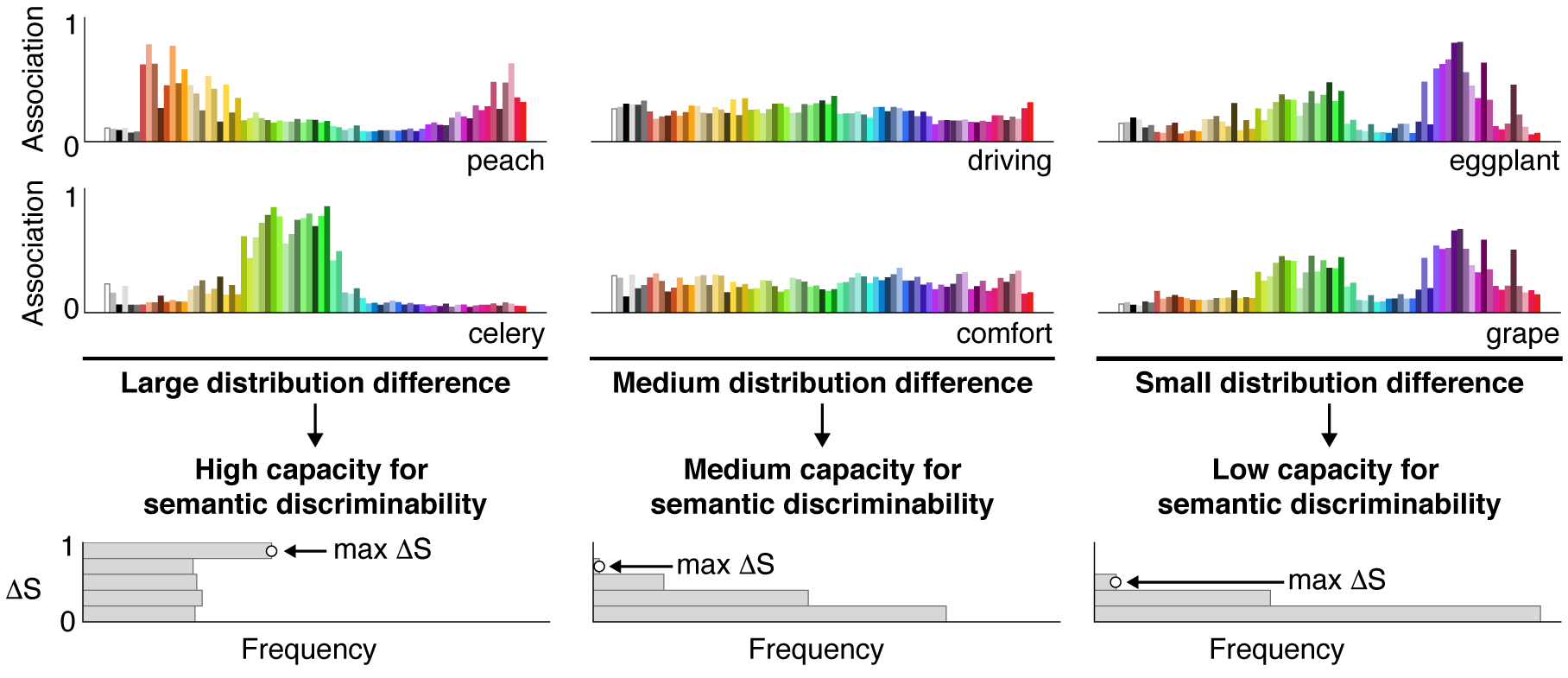
Mukherjee, K., Yin, B., Sherman, B. E., Lessard, L. & Schloss, K. B. Context matters: A theory of semantic discriminability for perceptual encoding systems. IEEE Transactions on Visualization and Computer Graphics.  PDF
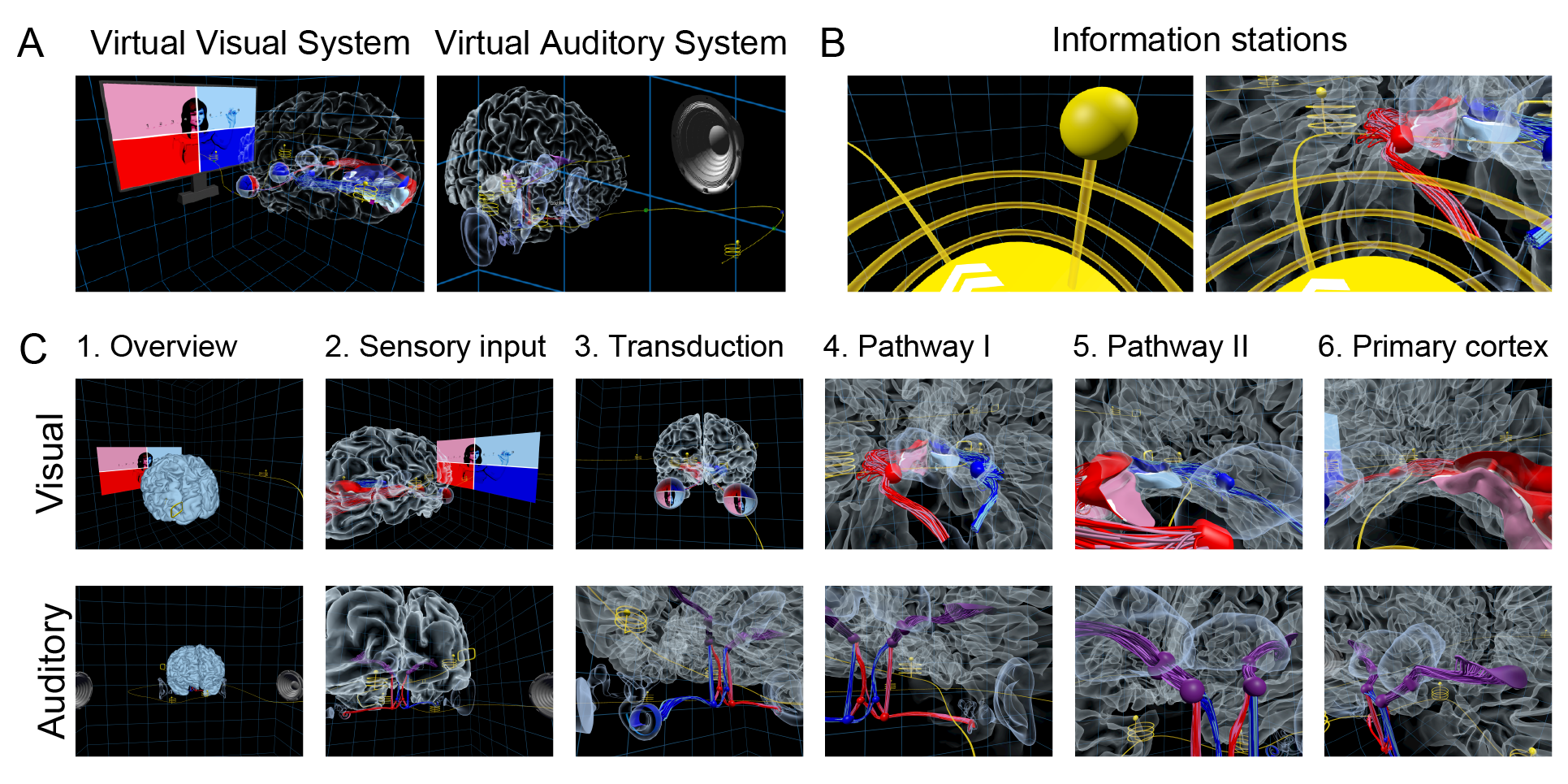
 

Schloss, K. B., Schoenlein, M. A., Tredinnick, R., Smith, S. Miller, N. Racey, C. Castro, C. Rokers, B. (2021-online). The UW Virtual Brain Project: An immersive approach to teaching functional neuroanatomy. Translational Issues in Psychological Science. PDF


 

PI Karen Schloss received the 2020 Steve Yantis Early Career Award

The Psychonomic Society awarded PI Karen Schloss with the 2020 Steve Yantis Early Career award. As stated on their site:

The Psychonomic Society confers scientific awards each year upon young scientists who have made excellent scientific contributions to the field of cognitive psychology early in their careers. The purpose of the Early Career Award (ECA) is to raise the visibility of our science by recognizing excellent young scientists within the field.

https://www.psychonomic.org/page/early_career_award


Christopher Thorstenson to RIT

CChristopher Thorstensonhristopher Thorstenson has been appointed to a tenure-track position in Color Science at Rochester Institute of Technology. He will start in Fall 2021, so excitedly, we get to keep him for another year! Congratulations Chris!

NSF CAREER award

PI Karen Schloss received an NSF CAREER award to advance the understanding of visual reasoning for visual communication. This research can be translated to producing online tools for designing visualizations, which will improve STEM education and increase public literacy and engagement with science and technology. Our education plan will use visual communication to make science more accessible and engaging through virtual reality (VR) and accompanying hands-on experiences with color and visualization.  Click here for more details.

Congrats to Autumn Wickman!

Autumn Wickman

Autumn Wickman received an Outstanding Undergraduate Research Scholar Award from the UW-Madison Department of Psychology. Congratulations Autumn!